
We Feed the World
Directed by
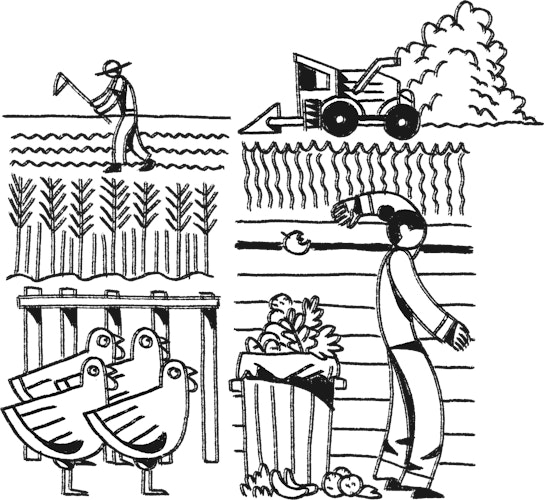
Why doesn’t a tomato taste of a tomato? How do we explain that 200 million people in India, which supplies 80% of Switzerland’s grain, suffer from malnutrition? Why are thousands of acres of Amazon forest chopped down to plant soya plantations? Is water a common good to which everyone is entitled or, as the president of Nestlé argues, a type of food with a market value of its own? This is a film about food and globalization, about fishers and growers, about the food flow and the money flow, about the scarcity of resources denied to many and the abundance reserved to a privileged few. A look at the production of the food we eat and an attempt to find the answers world hunger demands.
We began writing the screenplay in 2003 and secured financing in a short space of time. Filming began in March 2004 and lasted about a year, during which we shot about 84 hours of footage. My way of working with people and establishing a relationship with them is very time-consuming. Generally, they don’t say what they think immediately. Farmers, above all, complained about facilities and prices and food supply chains, but not in front of the cameras. Here in Austria, farmers and producers belong to two important supply chains and are terrorized by the risk of retaliation. Ultimately, my approach helped us. We weren’t interested in finding out what was prohibited, but in the mechanisms whereby potatoes are transported from Munich to Trieste, where they are marked, sent on to Regensburg, packed and taken to Budapest, where they are processed into chips.
The film takes a very subjective view of the manipulation of food. For me the central question was: What has all this got to do with us? Spanish tomatoes, the African laborers who harvest them … What has the deforestation of rain forests got to do with us? The slogan that characterizes our time is “profit at any cost,”, or “predatory capitalism,” as Jean Ziegler calls it.
Globalization is neither good nor bad; the question is how to address it. In this film, the bait is food production but its strong message is that we have to live differently. This is why we entitled it We Feed the World. We all buy food, so we have the power to control consumption! We don’t want tomatoes and strawberries at Christmas, we don’t want food sent from 3,000 kilometers away. We don’t want our livestock to devour South American rainforests. Only we can change direction. Who else but us?
Gallery


Media Download
Poster
High Resolution Images


Food



Funded by the European Union. Views and opinions expressed are however those of the author(s) only and do not necessarily reflect those of the European Union or the Creative Europe Media Program. Neither the European Union nor the granting authority can be held responsible for them.